How to Rinse, Dry, and Store a Dive Mask, Snorkel, and Fins
Direct Answer
After saltwater use
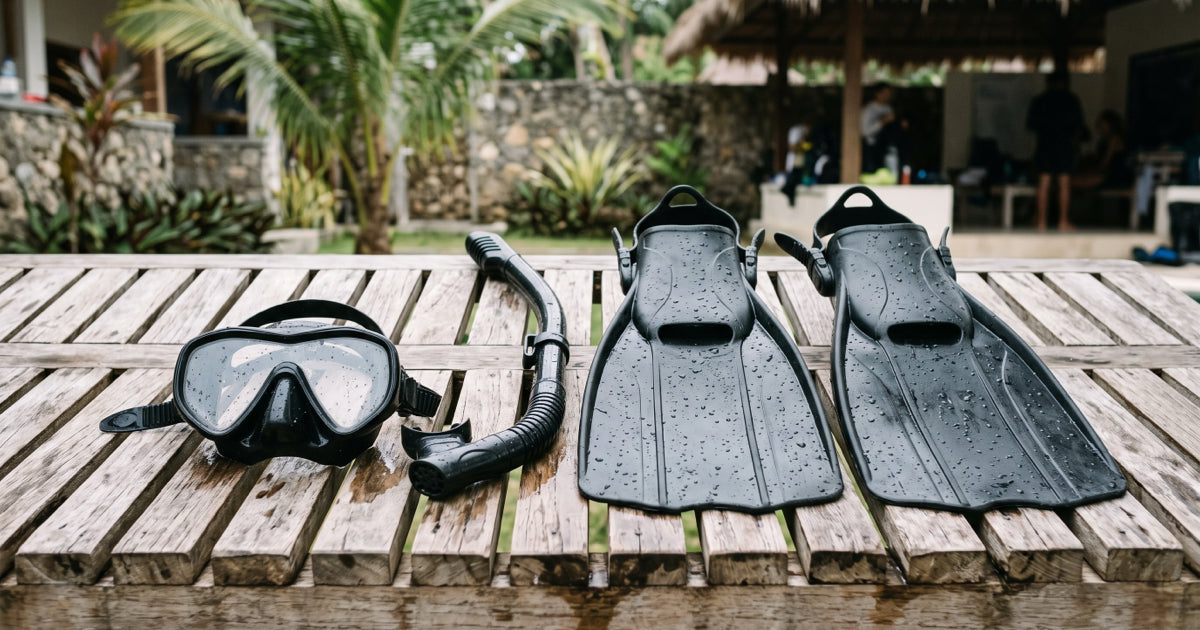
Alert Diver (DAN) says to thoroughly rinse all your dive gear in clean fresh water after every dive or at least every day of diving. PADI says: along with your mask, rinse your snorkel in fresh water after each use and store it in a cool, dry place, out of direct sunlight. PADI says to rinse your fins in fresh water after each use and store them in a cool, dry place, out of direct sunlight.
Drying before storage
After rinsing, Alert Diver says to allow gear to dry completely in a cool, shady and well-ventilated area before you put it away.
Storage
Alert Diver says ultraviolet (UV) radiation can be very damaging to dive equipment. Alert Diver says the box that came with your mask will help prevent other equipment from crushing or deforming the lenses or silicon skirt. PADI says to store the snorkel away from neoprene rubber to prevent staining of the silicone parts.
Manufacturer instructions control where they differ from this guide. This article does not promise a lifespan or a safety outcome.
FAQ
How often should I rinse my dive gear?
Alert Diver says to thoroughly rinse all your dive gear in clean fresh water after every dive or at least every day of diving.
Where should gear dry before storage?
After rinsing, Alert Diver says to allow gear to dry completely in a cool, shady and well-ventilated area before you put it away.
Can ultraviolet radiation damage dive equipment?
Alert Diver says ultraviolet (UV) radiation can be very damaging to dive equipment.
Why store a snorkel away from neoprene rubber?
PADI says to store the snorkel away from neoprene rubber to prevent staining of the silicone parts.
How can the mask box help in storage?
Alert Diver says the box that came with your mask will help prevent other equipment from crushing or deforming the lenses or silicon skirt.